
Namibia’s Etosha National Park is pure safari gold, but not in the traditional “track down the Big Five” way. A visit to this vast, dry and remote southern African destination is about as far as you can get from the usual safari.
It looks very different to what you might expect from the likes of the Masai Mara or the Okavango Delta. Forget lush and green and replace them with dry and dusty. Life in Etosha is all about water (and the lack of it), not surprising in this bare and challenging desert nation.
The 4,800 square kilometre salt pan which gave it its name (Etosha means “great white place”) is the centrepiece of Namibia’s second-largest national park. It covers about 22,270 square kilometres, a mixture of open salt flats, grassland and dense mopane woodland.

A place of contrasts
The remains of an ancient lake system once fed by rivers to its north and east, the pan is now an expanse of mostly white clay mud beneath a fine layer of salt crystals.
In the dry season (April to October) it seems forbidding, shimmering in the heat. Wildlife gather around waterholes and seek whatever shade they can find around the edge of the pan.
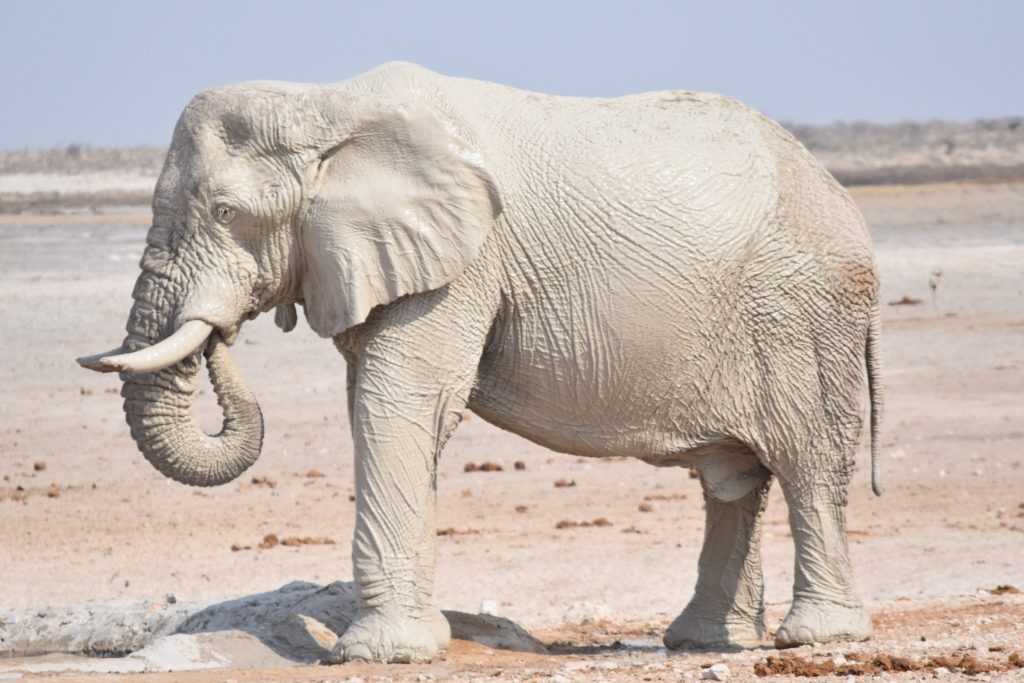
Elephants bathe in the pale mud of the waterholes and shower themselves with fine white dust and sand, becoming ghostlier versions of their usual grey selves. Everything looks amazing against this sharp background and bright blue sky.
In the wet season (November to March) seasonal rains turn Etosha into a wetland paradise filled with life, and many migratory birds from the northern hemisphere spend their winter here, and flamingos come to breed.
Adapted wildlife
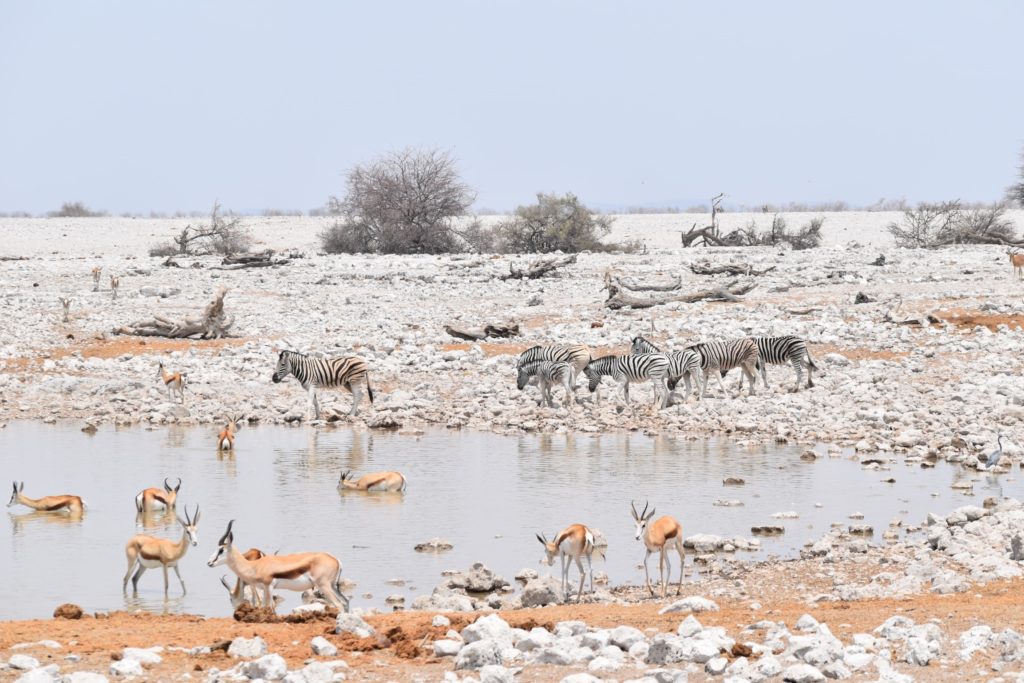
Surprisingly, though, the best game viewing takes place in the dry season, when it’s not unusual to see many different species around the water. Everything from elephants and black rhinos mixed in with gemsboks, springboks, zebras, ostriches and giraffes.
Lion ambushes are frequent, and you may even see a leopard or cheetah lying in wait around the waterholes. They take advantage of whatever cover they can find and wait for thirsty prey to let their guard down.
Life here is challenging, but the species that make it home have adapted to the hostile environment over the ages. Etosha has one of the highest densities of desert-adapted black rhinos in the world, as well as Kalahari lions and elephants. There are also smaller animals, such as the Damara dik-dik antelope, more than 320 bird species and 110 species of reptile.
Where to stay
There is a good selection of luxury camps and lodges around Etosha, including Onguma Bush Camp and Little Ongava, both on private concessions adjacent to the park

Please get in touch with us to include Namibia and Etosha in your next African safari itinerary.